History of Curling
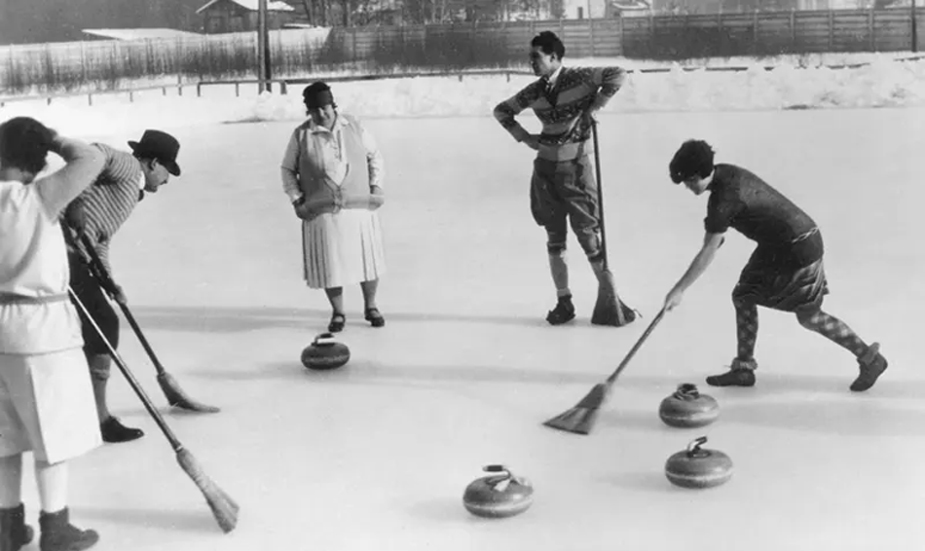
Curling originated in early 16th-century Scotland as a folk game in which stones were slid across frozen ponds. Though it may appear to be a simple sport of sliding stones on ice, it embodies centuries of history and strategic evolution. Through immigrants, the game spread across Europe and North America, eventually becoming the “chess on ice” we know today. Both Korea and the United States, despite their different cultural backgrounds, have embraced curling as a sport of cooperation, challenge, and true sporting spirit.
Global Origins
World Curling Timeline
| Year | Country | Major Event |
|---|---|---|
| 1511 | Scotland | First recorded mention of curling in historical documents |
| 1838 | Scotland | World’s first curling club (Royal Caledonian Curling Club, RCCC) founded |
| 1855–1890 | United States | Numerous curling clubs established in Chicago, New York, and other cities |
| 1958 | United States | United States Curling Association founded |
| 1994 | Korea | Curling introduced in Gangwon and Gyeongbuk regions |
| 1998 | Japan | Official Olympic debut at the Nagano Winter Games |
| 2002 | Korea | Korea Curling Association (KCA) founded |
| 2018 | Korea / USA | Korea’s Team Kim wins silver medal; U.S. Men’s Team wins first Olympic gold |
Curling: Then and Now
| Category | Early Curling (1600s–1800s) | Modern Curling (1990s–Present) |
|---|---|---|
| Playing Venue | Frozen rivers and lakes | Indoor refrigerated curling rinks |
| Stone Material | Irregular local stones | Precision-crafted Ailsa Craig granite |
| Scoring Rules | Unclear, varied by region | Standardized under international rules |
| Sweeping Tools | Short wooden brooms, cloth pieces | High-performance synthetic brushes |
National Development
Development of Curling in the United States
Curling was introduced to the U.S. in the mid-19th century by Scottish immigrants, especially in the Northeast and Midwest. It spread rapidly in colder regions such as Wisconsin, Minnesota, and New York.
Growth Timeline
· Late 1800s: Boom in curling club establishments (e.g., Grand National Curling Club, Chicago Curling Club)
· 1958: United States Curling Association (now USA Curling) founded
· 1960s–Present: Curling expanded across North America; college leagues and youth programs flourished
· 2018 PyeongChang Winter Olympics: U.S. Men’s Team won its first Olympic gold medal
Skip John Shuster’s dramatic strategy gained widespread recognition Popularity of curling surged nationwide
Today, the U.S. has over 20,000 registered curlers, with numerous university and community teams actively competing
Growth of Curling in Korea
Although Korea’s curling history is relatively short, it has quickly risen to become one of the world’s strongest competitors.
Introduction and Growth
· 1994: Curling introduced in Uijeongbu (Gangwon) and Uiseong (Gyeongbuk)
· 1997: Uiseong Curling Center built; youth athlete development began
· 2002: Korea Curling Association (KCA) founded
· 2007: Adopted as an official event at the National Sports Festival
Milestones
· 2018 PyeongChang Winter Olympics
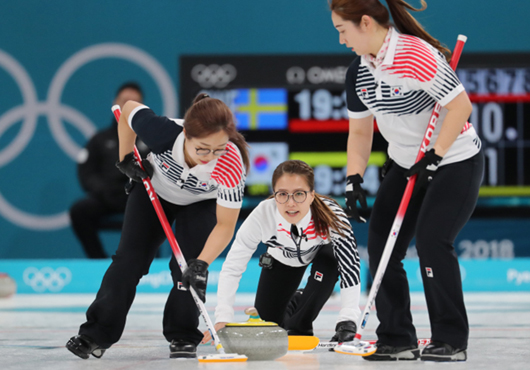
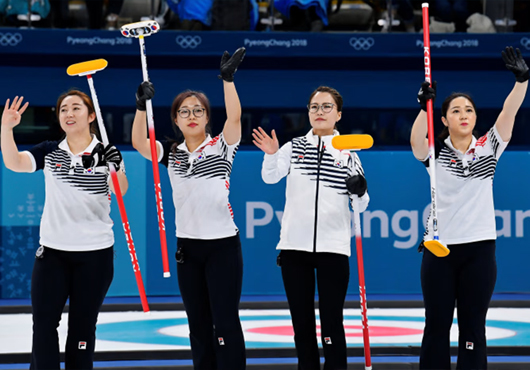
- Women’s team Team Kim achieved a historic silver medal with an undefeated run
- The iconic chant “Yeongmi-ya!” sparked a nationwide curling boom
· Expansion of curling rinks nationwide: Gangneung, Uiseong, Jincheon, Seoul, Chuncheon, and more
· Establishment of curling teams in middle schools, high schools, and universities
· Rapid growth of regional curling clubs and community groups
· https://youtu.be/6vxIDE0dM0c