The Science of Curling
Curling is not merely a game of force played on ice. It is a comprehensive strategic sport that brings together physics, materials science, thermodynamics, and mathematics. The science hidden within a broom and a stone makes every movement on the ice measurable and predictable.
Physics of Curling
Rotation and Trajectory – The Curling Paradox
One of curling’s defining features is the unique movement of the stone: it rotates while curving in the same direction as the spin.
This phenomenon is known as the Curling Paradox.
Principle Summary
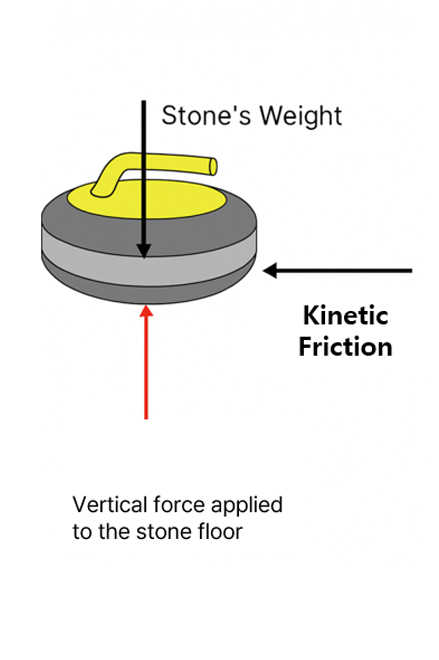
· The stone’s bottom is not flat; only a narrow edge called the contact ring touches the ice.
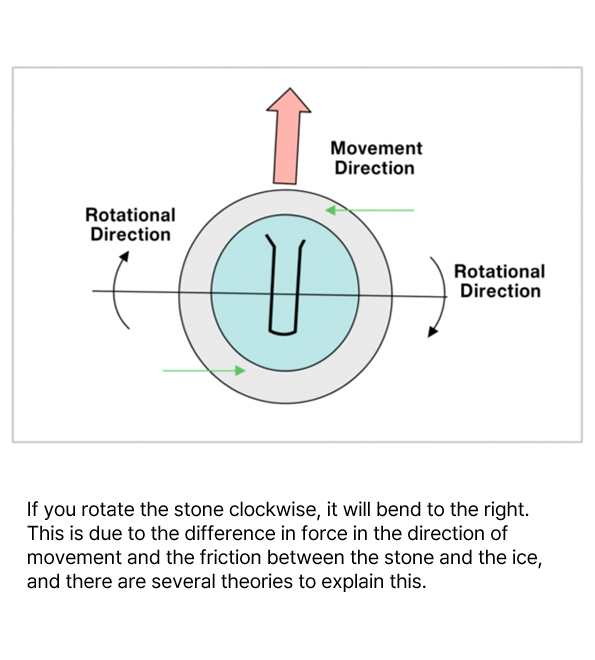
· Depending on the rotation, the front part of the ice experiences more friction, creating an imbalance.
· As a result, the stone curves in the same direction as the spin.
· Unlike ordinary balls, which curve opposite to their rotation, curling stones curve with their rotation — a distinctive hallmark of the sport.
Trajectory Simulation by Rotation Speed
The trajectory of a curling stone changes depending on its rotation speed.
A curling stone behaves differently based on how much spin it has as it slides,
and special “moments” (like gear-on and phase transition) can change how it moves or slows down.
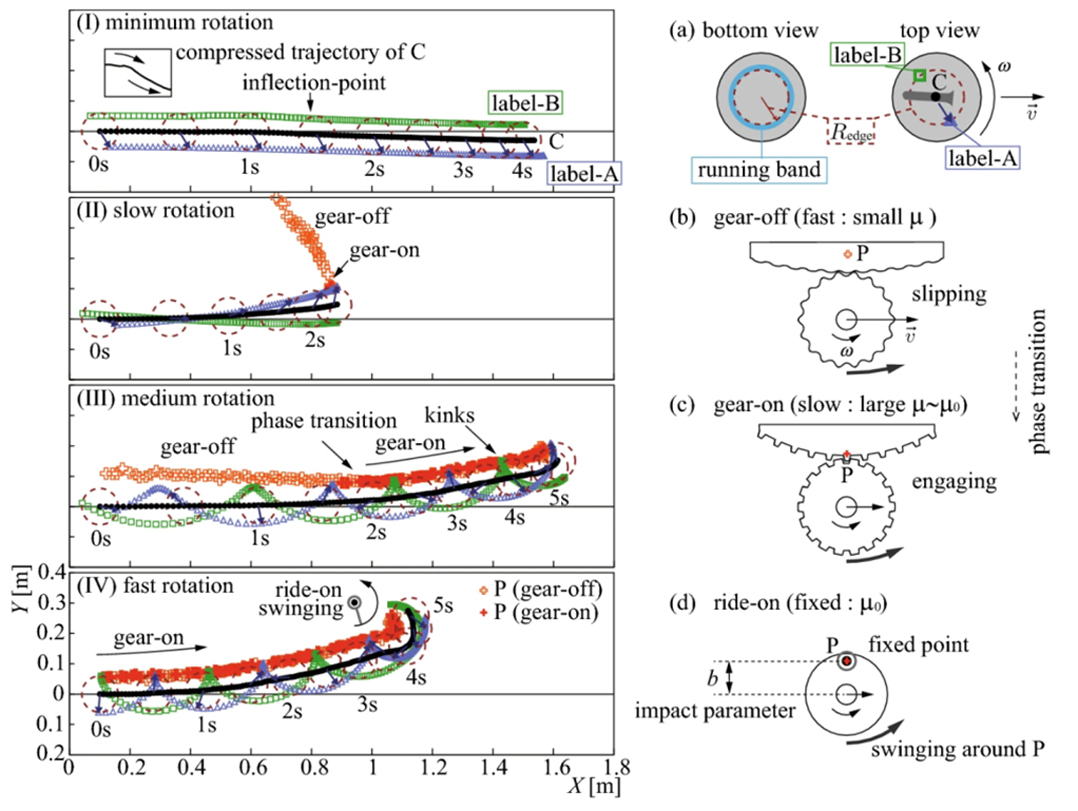
Examples of the curling stone’s trajectories for labels
A, B, and C in the horizontal plane plotted for every time step.
* Image source : Murata, J. Study of curling mechanism by precision kinematic measurements of curling
stone’s motion. Sci. Rep. 12, 15047 (2022).
Materials & Techniques
The Science of Stone Material – Ailsa Craig Granite
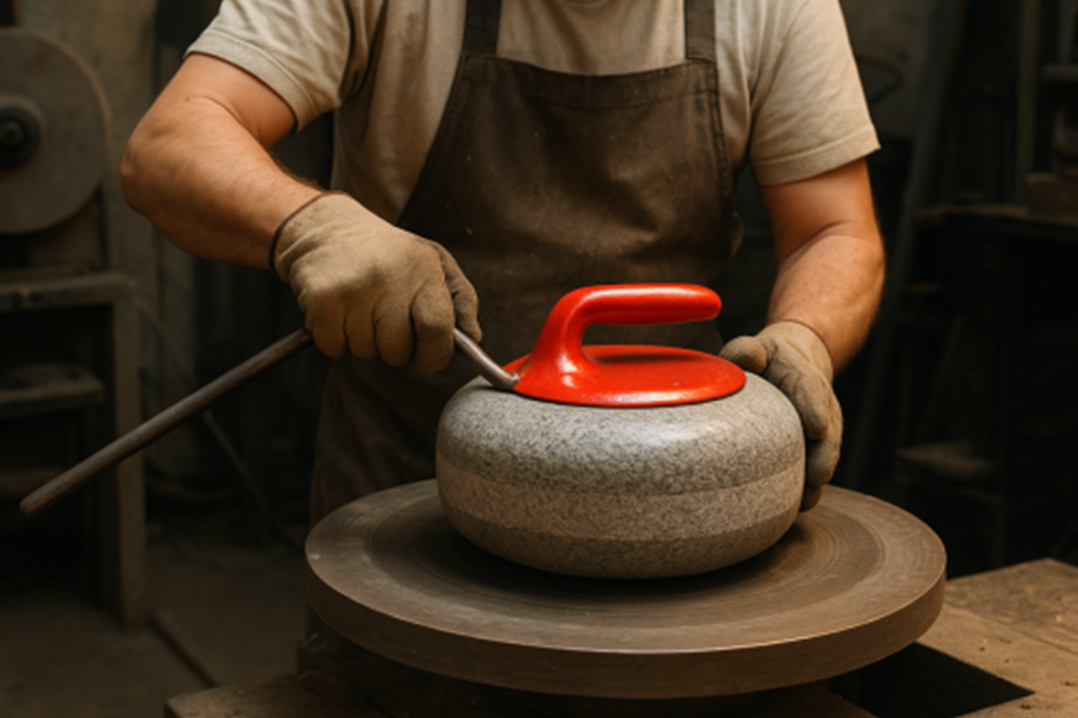
Curling stones are made exclusively from a unique type of granite quarried only on Ailsa Craig Island in Scotland. Why? Its rare physical properties make it ideal for the sport.
| Feature | Description |
|---|---|
| Material | Blue Hone (bottom), Common Green (body) |
| Water Absorption Rate | Below 0.01% → prevents cracking in freeze–thaw cycles |
| Durability | Can withstand hundreds of games without significant wear |
| Precision | Maintains uniform surface after polishing → ensures consistent trajectory |
Each stone costs about $1,000–$2,000, and production is controlled by a few
manufacturers, including Kay’s of Scotland.
Techniques & Strategy
The Science of Sweeping – Heat and Friction Control
Sweeping quickly brushes the ice, briefly raising its surface temperature.
This creates a thin layer of water, reducing friction and allowing the stone to travel farther and straighter.
Effects of Sweeping
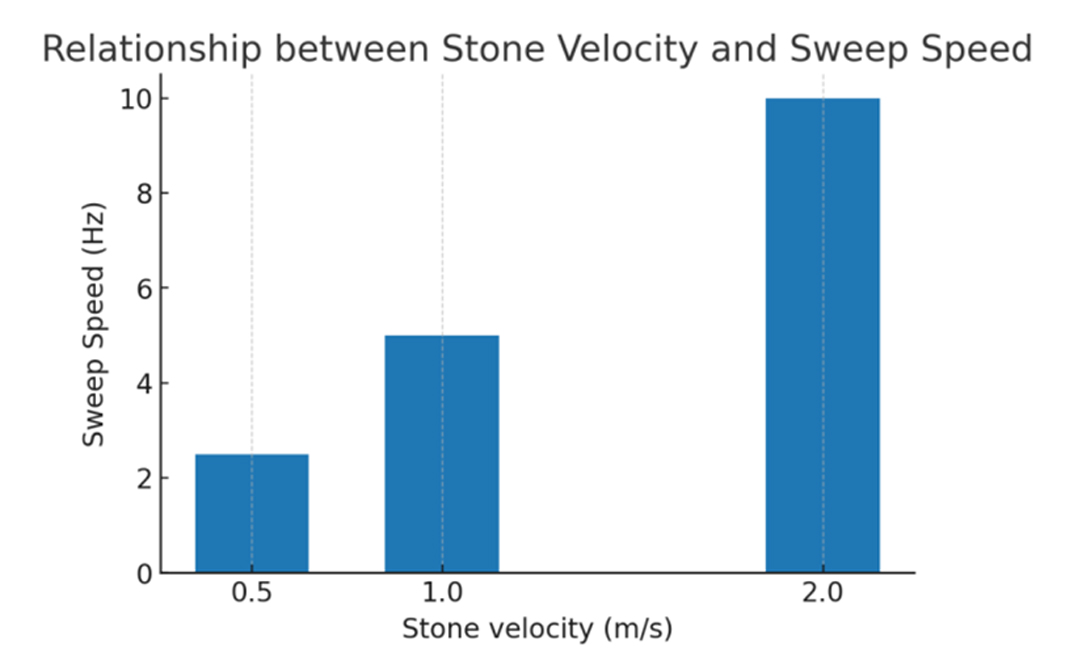
Sweeping with greater intensity in curling—either by pressing down harder or by increasing sweeping speed—results in the stone traveling faster and in a straighter path, reducing its curl.
| Sweeping Intensity | Result |
|---|---|
| Strong | Increases speed, straightens trajectory |
| Light | Maintains curl, increases curvature |
Sweeping is not just about physical effort — it requires real-time analysis, teamwork, and precision control.
* Image source: Eddy, A., & Linton, L. (2013). The Sports Science of
Curling: A Practical Review. Sports Medicine, 43(4), 269–279.
https://doi.org/10.1007/s40279-013-0013-4
Math & Strategy
Mathematics and Physics in Strategy
Curling is less about “throwing a stone” and more about calculating precise vectors.
Scientific Concepts Applied in Curling
· Angle Calculations: Using the principle of angle of incidence = angle of reflection for takeouts
· Vector Addition: Predicting speed and direction after stone-to-stone collisions
· Probability and Statistics: Anticipating opponent strategies, analyzing shot success rates
· Game Theory: Choosing between Guard vs. Takeout as part of strategic decision-making
The Skip evaluates dozens of possible outcomes with every throw, guiding the team’s tactics accordingly.
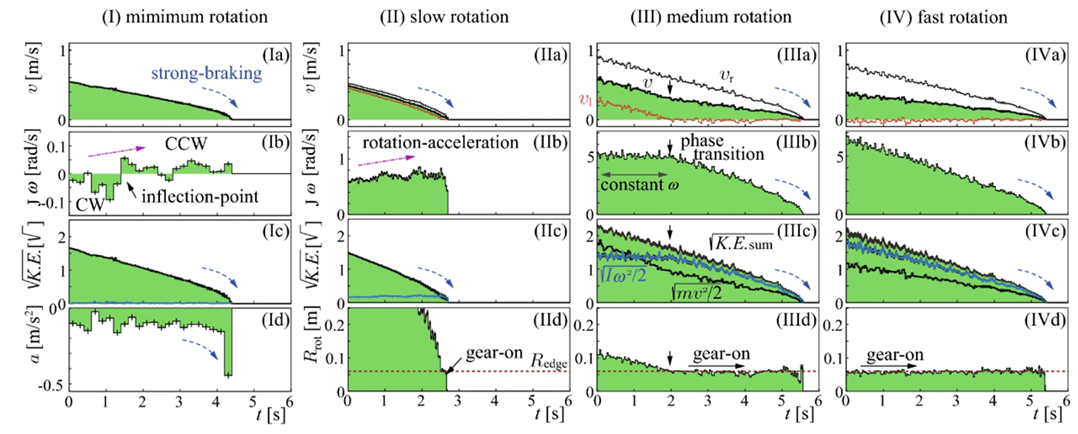
This figure shows how a curling stone moves and slows down on ice, depending on how fast the stone is spinning. There are four main situations shown: minimum rotation, slow rotation, medium rotation, and fast rotation. For each case, four panels (a–d) show what happens over time to the stone’s speed, spin, energy, and another measurement called rotation radius.
* Image source: Murata, J. Study of curling mechanism by precision kinematic measurements of curling stone’s motion. Sci. Rep. 12, 15047 (2022).